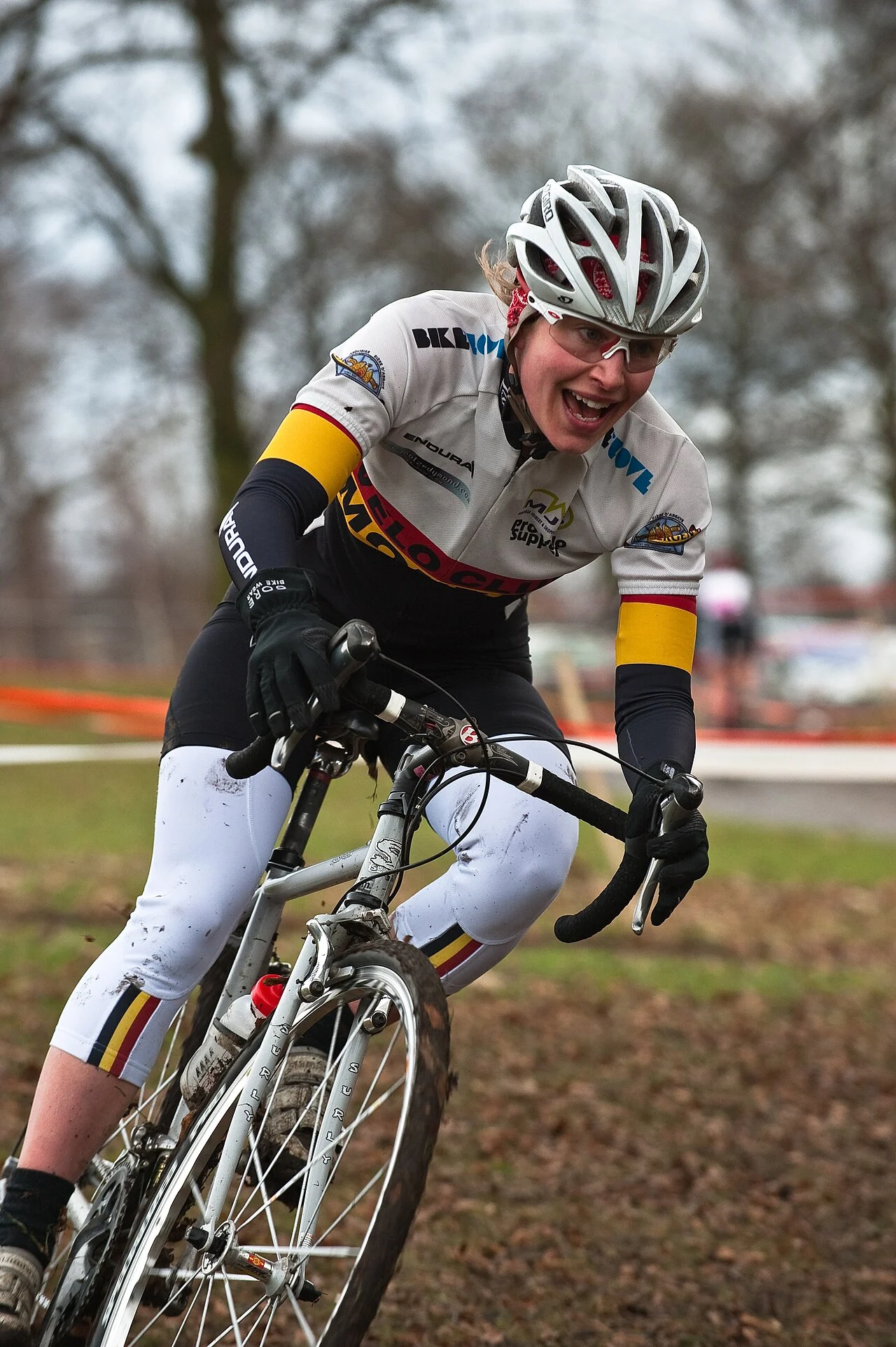
On 8 November 2003 in Tábor, in the Czech Republic, the first European Cyclo-cross Championshipsare held. Three titles are awarded in a single day. In the elite women’s race the winner is Germany’s Hanka Kupfernagel, in the under-23 men’s the Czech Martin Zlámalík, and in the junior men’s the Belgian Niels Albert.
Twenty-three years later, in November 2026, the European Championships return, this time in Zeddam, in the Netherlands.
Tábor, 8 November 2003: the first edition
The European Cyclo-cross Championships are born in a single day. On 8 November 2003, edition number 1, at Tábor, organised by the UEC, the European Cycling Union.
The edition is opened by Václav Klaus, then president of the Czech Republic.
Three titles and nine medals: what the 2003 Europeans looked like
The initial format is lean: elite women, under-23 men and junior men. Three titles, each with gold, silver and bronze: nine medals in all. The elite men’s race is missing.
The European Championships have been held in November since 2003, at the start of the cyclo-cross season.
The programme has since grown. The under-23 women arrive in 2013, the elite men in 2015, the junior women in 2019: from three titles it goes up to six.
The elite women: Hanka Kupfernagel and Marianne Vos
The 2003 podium: Kupfernagel, Vos, Salvetat
On the podium of the 2003 elite women’s race are Germany’s Hanka Kupfernagel in first, the Dutchwoman Marianne Vos in second and France’s Maryline Salvetat in third. Vos finishes second at Tábor.
Kupfernagel, born on 19 March 1974 in Gera, had already won the Cyclocross World Championships in 2000 and 2001. She would win two more, in 2005 and 2008, with two silvers (2002, 2003) and a bronze (2004) in between. In 2007 she also won the world time trial title on the road. She officially retired in 2016.
The women’s roll of honour from 2003 to 2010
The first eight years of the elite women’s race are shared between three names. Kupfernagel wins in 2003 and 2004. Vos takes 2005. Daphny van den Brand wins in 2006 and 2007, then Kupfernagel wins again in 2008.
Vos closes the series in 2009 and van den Brand in 2010. Vos, second in the first edition, is thus champion twice in the first eight.
Czechs and French on the 2003 podiums
In the under-23 race Martin Zlámalík wins, ahead of his compatriot Martin Bína. The bronze goes to France’s Steve Chainel.
In the junior race the gold is Niels Albert’s. The silver goes to Roman Kreuziger, a Czech, and the bronze to France’s Clément Lhotellerie.
The Czech Republic has one gold and two silvers. France has three bronzes, one per race. Germany and Belgium have one gold each, the Netherlands one silver.
Niels Albert: from junior European champion to two-time elite world champion
The junior winner at Tábor is Belgium’s Niels Albert, born on 5 February 1986 in Bonheiden. In November 2003 he is 17. The European title is the first of a series: in 2004 comes the junior world title. He then wins the European under-23 title three years running, in 2005, 2006 and 2007.
Among the elite he becomes world champion twice: in 2009 at Hoogerheide and in 2012 at Koksijde. The boy from the junior Europeans wears the rainbow jersey of the senior ranks.
On 19 May 2014, aged 28, Albert announces his retirement because of heart problems.
The under-23 men from 2003 to 2010
After Zlámalík, the under-23 roll of honour continues with Lars Boom, winner in 2004.
Then comes Philipp Walsleben, in 2008. Robert Gavenda wins in 2009 and is the same rider who four years earlier had won as a junior in 2005: two European titles in two different categories. Lars van der Haar closes this series, in 2010.
The juniors and the venues of the first ten years
Among the juniors, after Albert in 2003 the 2004 title goes to Julien Taramarcaz. From 2006 to 2010 the winners, in order, are Vincent Baestaens, Lubomír Petruš, Tijmen Eising, Émilien Viennet and Lars Forster. In eight junior editions the eight winners are all different names.
The venues of the first ten years tour Europe. After Tábor it is Vossem, in Belgium (2004), then Pontchâteau, in France (2005), and Huijbergen, in the Netherlands (2006). Hittnau, in Switzerland (2007), and Liévin, in France (2008), follow. 2009 brings the race back to Belgium, at Hoogstraten.
The last stretch of the decade leads to Frankfurt, in Germany (2010), Lucca, in Italy (2011), and Ipswich, in Great Britain (2012). In ten editions the host countries number eight: Belgium and France host twice, the others once.
The Italians at the Europeans: from Tábor to Silvelle
At Tábor in 2003 no Italian reaches the podium: the nine medals go to Czechs, French, Germans, Belgians and Dutch. From 2003 to 2012 the only Italian medal is Elia Silvestri’s silver in the men’s under-23 race, in 2010.
Italy has, however, hosted the race. The European Championships were held at Lucca in 2011 and at Silvelle, a hamlet of Trebaseleghe, in 2019.
The medal table updated to 2025 puts Italy in fifth place with 6 golds, 6 silvers and 7 bronzes, 19 medals in all. The reigning champions are Mattia Agostinacchio in the under-23 race and Filippo Grigolini among the juniors.
Zeddam 2026: the Europeans return to the woods of Montferland
The 2026 European Championships are held at Zeddam, in the municipality of Montferland, in Gelderland, in the Netherlands, from 6 to 8 November.
Zeddam hosts a major event again twenty years after the 2006 Cyclocross World Championships. The course is expected to include the staircase of more than 100 steps.
News written with the help of Mnemosyne.
Sources
- Wikipedia (French), «Championnats d’Europe de cyclo-cross».
- Wikipedia (Italian), «Campionati europei di ciclocross 2003».
- Wikipedia (English), «UEC European Cyclo-cross Championships».
- Wikipedia (English), «Hanka Kupfernagel».
- Wikipedia (Dutch), «Europese kampioenschappen veldrijden 2003».
- Photo: johnthescone from Sheffield, CC BY 2.0, via Wikimedia Commons.
